layiq
/la·yiq/adjective
worthy; deserving; fitting; suitable.
A role, opportunity, or path that merits attention, time, and pursuit.
Loading LAYIQ…LAYIQ
Most job searches bury you in endless listings. LAYIQ narrows the field to the roles that actually make sense.
Strong alignment
How LAYIQ works
Rather than relying on what you type into a search box, we use what we know about your professional background and what you're looking for next to continually evaluate opportunities for you. You can still search and explore when you want to, but you don't have to be particularly good at constructing searches just to find an opportunity that fits you.
Seven connected ideas
Section 01
A résumé was written to describe where you've been, and we're also interested in where you'd like to go.
Your résumé is one of the first things LAYIQ uses, because it contains a lot of useful information about your experience, skills and career progression. It isn't enough on its own, though.
As you set up LAYIQ, you can tell us more about the work you're interested in and the things that matter in your next role. That may include the type and level of role, compensation, location, remote or hybrid preferences and other considerations that influence whether you would seriously consider an opportunity.
Two people with remarkably similar résumés can have completely different ideas about what they'd like to do next.

Section 02
There is a lot of work between finding a job listing and deciding it's a good opportunity.
LAYIQ works with an enormous inventory of jobs gathered from company career sources. Before matching becomes useful, that information needs attention. Jobs can be duplicated across sources, remain visible after they've gone stale, use inconsistent titles or contain incomplete information. We work through those issues as part of maintaining the job inventory rather than expecting you to sort through all of it.
Once we have a clearer picture of an opportunity, we can consider it in the context of your profile: the work itself, relevant experience and skills, seniority and scope, career direction, location and work preferences, compensation when it's available, and other information that can materially change whether the role makes sense.
This is also why we don't equate a large number of results with a good experience.

Section 03
We don't simply submit your résumé and a job description to a model and ask whether it thinks the two belong together.
Traditional job search is good at finding explicit things. If you search for a particular title in Seattle, software can find those words and that location very efficiently. Careers contain a lot of information that isn't nearly as tidy. Titles vary between companies, responsibilities overlap across functions, and experience gained in one industry may be surprisingly relevant somewhere else.
AI helps us interpret some of that context, but it works alongside structured rules and other signals within LAYIQ. The analysis considers different aspects of the opportunity independently and then brings them together.
It also pays attention when something doesn't make sense.

Section 04
A job appears under “recommended for you,” but it's difficult to tell whether the system recognized something meaningful about your experience or simply found the same job title somewhere in your history.
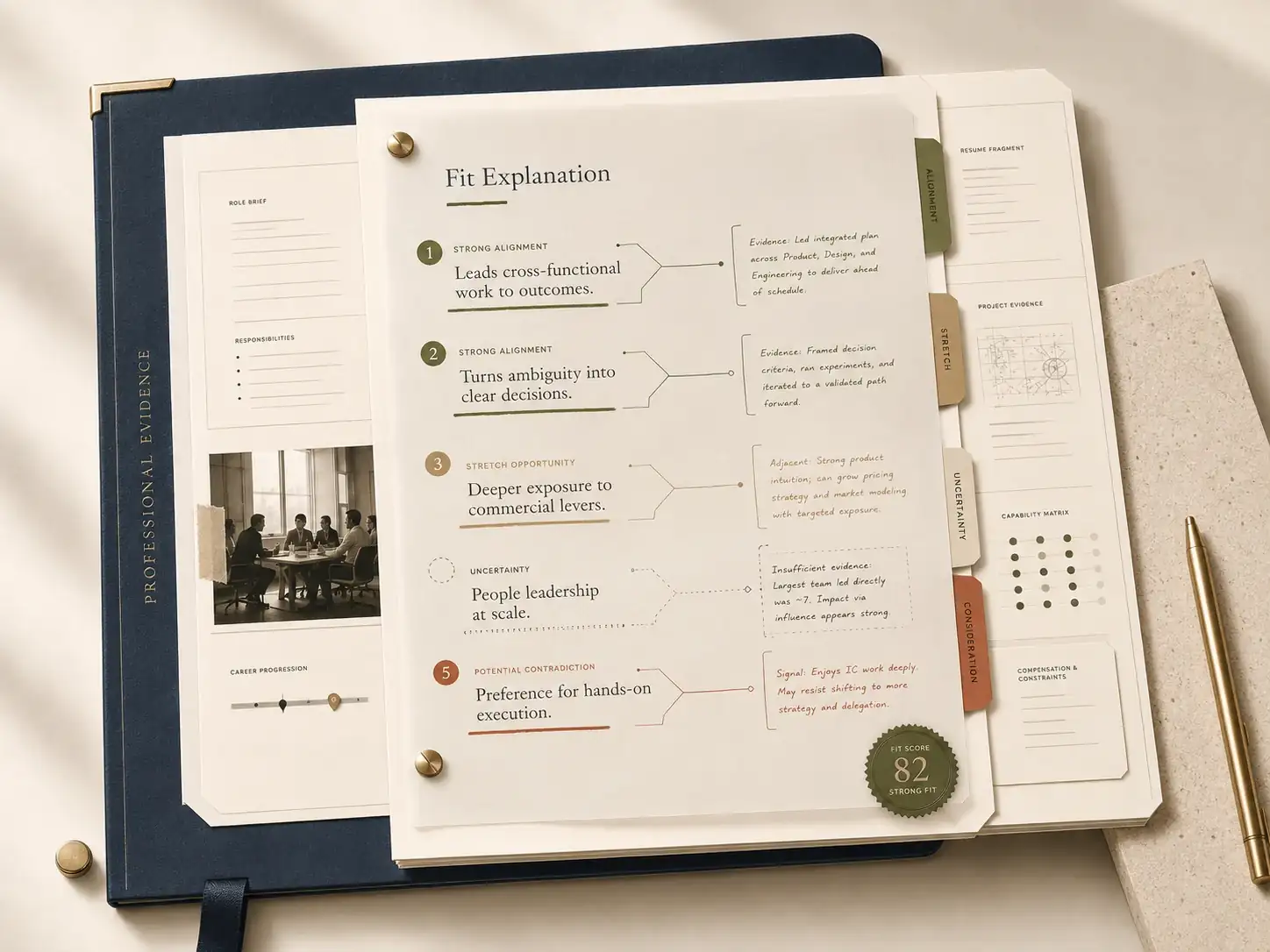
When we identify an opportunity as a potential fit, we show you what contributed to that assessment. You can see where your background lines up well and where there may be gaps or questions worth considering.
That doesn't mean the highest-rated opportunity will automatically be the job you want. Nor should it. Maybe you've spent ten years in an industry and desperately want to leave it. Maybe a slightly lower-paying role gives you access to work you've wanted to do for years. Perhaps you simply read the description and think, “Absolutely not.”
LAYIQ gives you another informed perspective on the opportunity. The decision remains yours.
Section 05
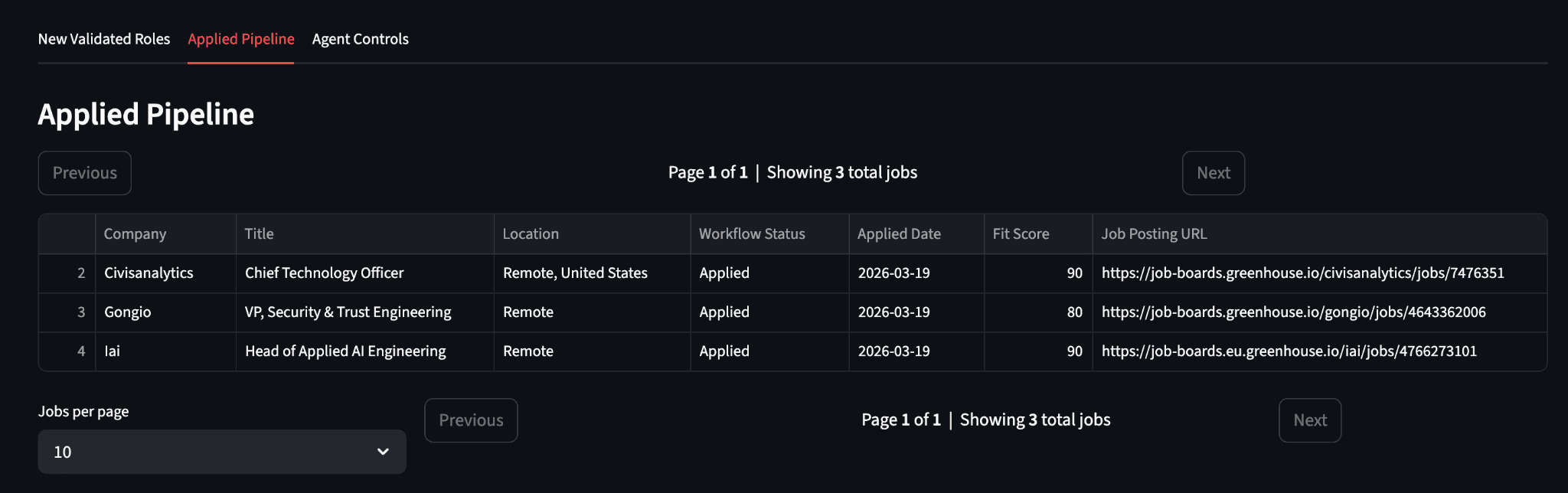
We don't want to optimize the experience around submitting the greatest possible number of applications.
When you decide to apply, LAYIQ sends you to the company's own application process. We made that choice deliberately. We want to help you decide which applications are worth submitting in the first place.
What you do with those opportunities also tells us something. Saving a role, dismissing one, pursuing another or telling us a recommendation missed the mark can provide additional context about your interests.
Over time, that gives LAYIQ a better understanding of the difference between a job you're technically qualified to do and one you'd actually consider doing.

Section 06
Your Job Curator keeps working between visits.
Searching repeatedly is one of those chores people have learned to accept as part of looking for work. New jobs appear every day, so you either keep checking or create a collection of alerts and hope something useful eventually lands in your inbox.
Your LAYIQ Job Curator takes a different approach. It continually evaluates new opportunities against the profile and preferences you've already established, which means LAYIQ can continue looking for relevant roles even when you aren't actively searching.
When you come back, you're not starting another search from the beginning.

Section 07
Before LAYIQ was a company, it was a tool one of our founders built for himself.
What began as a desktop application gradually became much more. Hunter began learning how company career sites and Applicant Tracking Systems worked behind the scenes, moving from traditional searches and parsing to direct access to structured job data.
Friends started using the product. The desktop application moved to the web. The technology became more sophisticated, and eventually the database grew to roughly half a million active jobs.
Along the way, Hunter discovered something that would become fundamental to LAYIQ: more jobs didn't make the product better. Better signal did.

The throughline
Your career is yours. We're here to understand it, earn your trust, and help you make more of what comes next.
About LAYIQ
Which roles are actually worth my time—and why?
01 / The beginning
Hunter Samuels was searching for his next opportunity and experiencing something millions of candidates know well: seeing the same jobs repeatedly, finding listings that were already stale, opening roles that sounded promising but weren't actually a good fit, and spending far too much time searching and scrolling. He wasn't interested in applying to hundreds of jobs or finding a faster way to click “Apply.” He wanted to find the handful of opportunities genuinely worth his time, understand why they might fit, and then apply directly with the company.
So, being a technology guy, he started building something.
What began as a desktop application gradually became much more. Hunter began learning how company career sites and Applicant Tracking Systems worked behind the scenes, moving from traditional searches and parsing to direct access to structured job data. Friends started using the product. The desktop application moved to the web. The technology became more sophisticated, and eventually the database grew to roughly half a million active jobs.
Along the way, Hunter discovered something that would become fundamental to LAYIQ: more jobs didn't make the product better. Better signal did. Knowing whether a job was current mattered. Knowing whether it was duplicated mattered. But understanding whether it was actually relevant to the individual looking at it mattered most.
The original product was called Roleworthy, because that was exactly what Hunter was trying to find—roles worthy of someone's time.
Then John joined the conversation, and the idea got bigger.

02
When Hunter approached longtime colleague John Shepard about building the company together, the conversation was still largely about creating a better way to discover jobs. It didn't stay there for long.
John had spent decades leading large technology organizations, building global teams, recruiting talent and developing leaders. He'd spent a significant part of his career thinking about how organizations find the right people and how people find opportunities where they can thrive. He had also experienced the other side of the equation as a candidate himself and understood how quickly a nuanced career can be reduced to titles, keywords and a few pages of résumé history.
After a few brainstorming sessions, Hunter and John realized that job discovery could be the beginning of the relationship rather than the end of it. What if a career platform understood not only someone's résumé, but their skills, accomplishments, preferences, goals and career direction? What if it could explain why an opportunity fit, identify what might be missing, and eventually help someone navigate the decisions and transitions that make up an entire career?
That broader vision needed a new identity. The name LAYIQ was inspired by an Arabic word meaning worthy, fit or suitable. It connects back to the original idea behind Roleworthy while giving the company room to grow well beyond traditional job search.
Today, that is the larger idea we're building toward: a trusted career intelligence platform designed around the individual. Not another job board or endless feed, but a platform that helps people make better career decisions.
What We Believe
Trust is built in, not added on.
Career intelligence requires people to share meaningful information about themselves, and we believe that creates an equally meaningful responsibility for us. We don't sell your information, and we don't accept sponsored job listings or artificially promote opportunities because someone paid to be seen. What LAYIQ surfaces should be driven by relevance and fit—not advertising economics.
We believe the same principle should apply to AI. It should help people better understand and articulate their real experience, not manufacture a more impressive version of it. The information and career materials created with LAYIQ should remain grounded in actual skills, accomplishments and experience.
Your information isn't our product. Your career is the point.
The opportunities worth your time should rise to the top.
One of the earliest lessons from building LAYIQ was that more inventory doesn't necessarily create a better experience. A career platform can contain hundreds of thousands of jobs and still leave the individual doing most of the work.
LAYIQ looks beyond keywords and titles, considering multiple dimensions of someone's professional identity to identify opportunities with stronger potential alignment and explain why they may be worth considering. The goal isn't to give someone more things to click. It's to reduce the noise so the opportunities that matter become easier to see.
Less searching. Less scrolling. Better signal for better decisions.
Built around where you've been—and where you want to go.
Finding the next job matters, but building a great career matters more. That's why our vision for LAYIQ extends beyond job discovery.
We're building toward a platform that can evolve alongside you, connecting career discovery with the information, insights and guidance that help you understand where you are, where you want to go, and what might help you get there. Your experience changes. Your skills grow. Your priorities evolve. The platform you trust with your career should be able to evolve with you.
Your next role isn't your career. It's one part of it.
Where We're Going
Launch 9/1/2026
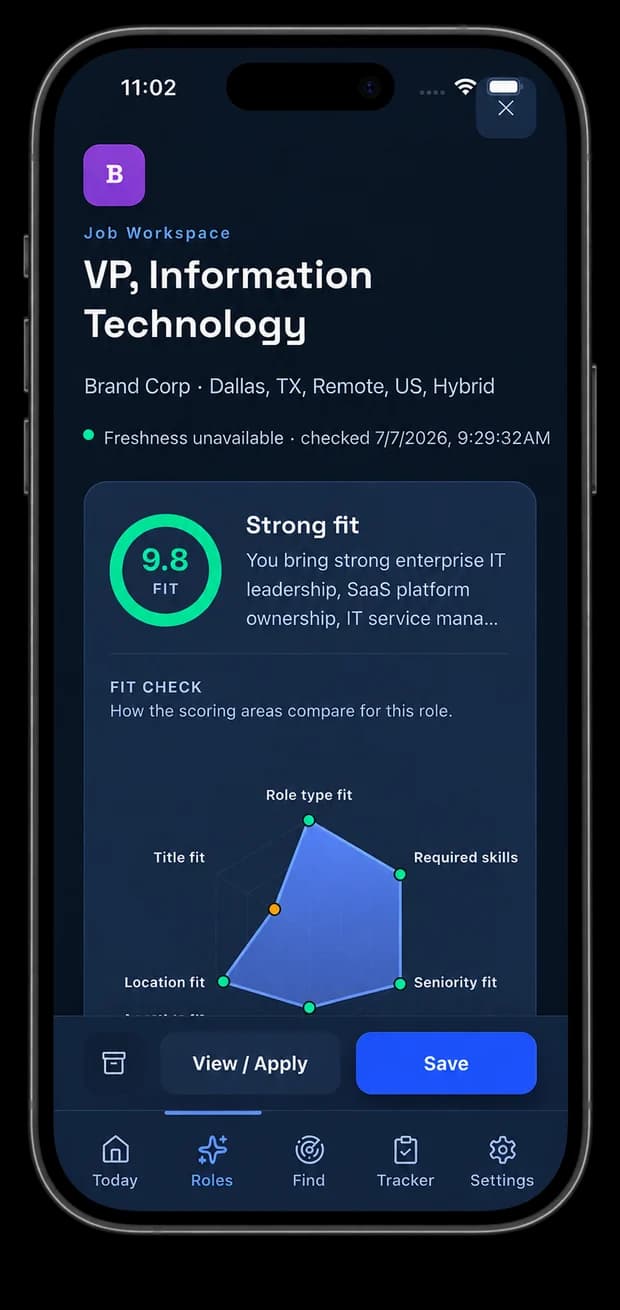
Mobile (iOS/Android) Q4 2026
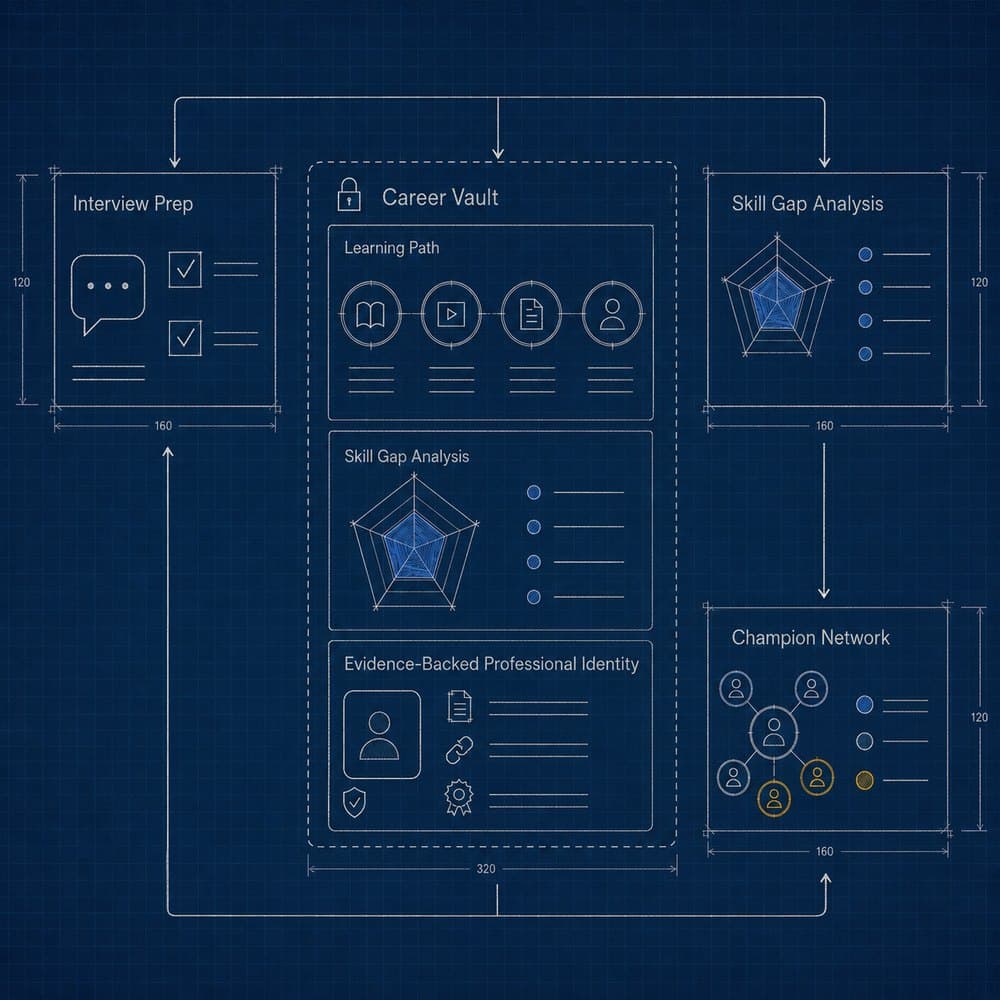
Career Passport 2027
A lot has been built, and there is plenty left to learn, validate, simplify and improve. We believe the best version of the platform will come from listening carefully to the people who use it, challenging our own assumptions and staying disciplined about the problem we originally set out to solve.
We're starting with fit-focused career discovery: building a high-quality inventory of current opportunities, understanding the person searching, identifying roles with genuine potential fit, explaining why, and helping candidates make better decisions about where to spend their time.
But job discovery is only the first step. Our longer-term vision is for LAYIQ to become a kind of career operating system—connecting discovery with application tracking, career information, role readiness, career planning, skill development and evidence-grounded career materials. Over time, we also see opportunities to improve the signals shared between candidates, employers and the hiring systems that connect them, while remaining grounded in the interests and trust of the individual.
Most job platforms have been built around inventory and application volume. We think the next generation of career technology should be built around judgment: Is this opportunity worth my attention? Why does it fit? What might I be missing? And what should I do next?
That's where LAYIQ is headed.
Better signals. Better matches. Better careers.
Hunter + John
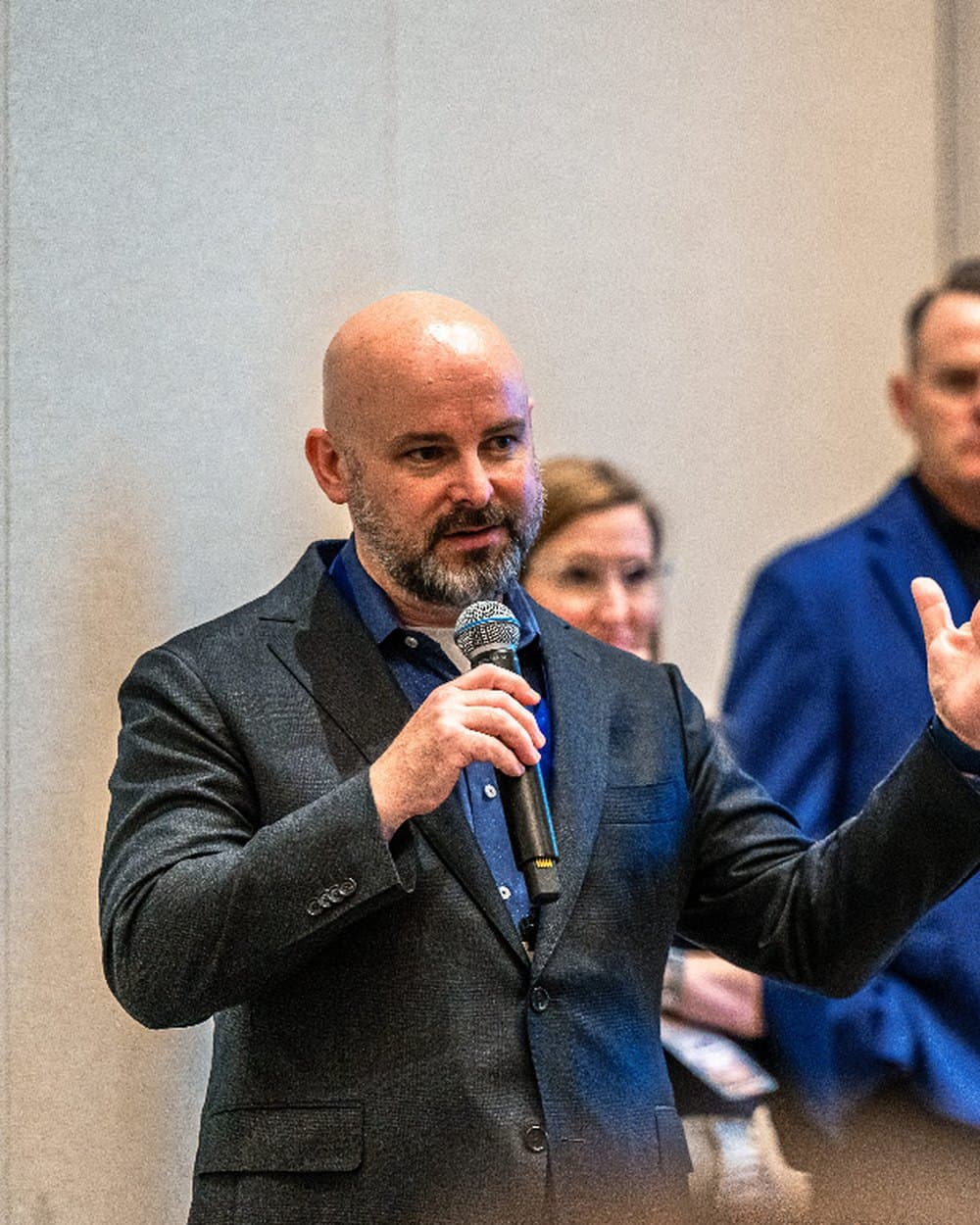
Hunter was deep in his own job search, buried under listings that didn't fit. So he did what builders do with a broken system: he took it apart and rebuilt it.
Hunter didn't originally set out to start a career technology company. He was trying to solve his own job search.
A technology and transformation leader by background, Hunter did what comes naturally to a builder when he encountered an inefficient system: he started taking it apart to understand how it worked. The desktop application he created for himself eventually grew into Roleworthy and became the technical foundation for LAYIQ.
Building it required Hunter to venture into technologies and disciplines that were often new to him. He moved from a simple local application to web infrastructure, large-scale structured job data, production environments and mobile applications while increasingly incorporating AI-assisted development into how he researches, designs, builds, tests and reviews the platform. There were wrong turns, rewrites and plenty of lessons learned the hard way, all of which helped shape the product that exists today.
Perhaps the most important lesson was that more technology, more data and more job listings don't necessarily produce better career decisions. The difficult—and interesting—problem is identifying the signals that matter to a particular person and making those signals understandable.
Today, Hunter leads LAYIQ's technology and product architecture while continuing to pursue the question that started the whole thing: Which roles are actually worth your time—and why?
John came to LAYIQ from a different direction. After decades leading large, complex technology organizations, building global teams, recruiting talent and developing leaders, he'd spent much of his career thinking about people and potential: how organizations find the right talent, how individuals find places where they can thrive, and why those two things so often fail to connect.
He had also navigated the system as a candidate himself and knew that experience and capability don't always fit neatly into a job title or résumé. As careers become more senior and more varied, the things that make someone right for an opportunity can become even harder to capture through conventional search and matching.
When Hunter showed John what he'd built and invited him to join the company, John saw an opportunity to take the underlying idea further. Their conversations expanded from finding better-fitting jobs to understanding the larger arc of someone's career—where they've been, what they've accomplished and learned, what they're capable of, and where they want to go next.
John helped shape that expanded vision, the LAYIQ identity, and many of the experiences now being built into the platform. Today, he focuses on company strategy, candidate experience, partnerships and growth, with the longer-term goal of building LAYIQ into a trusted career platform that remains useful long after someone's next job search ends. Like Hunter, he's helping build something he wishes had existed when he needed it.


